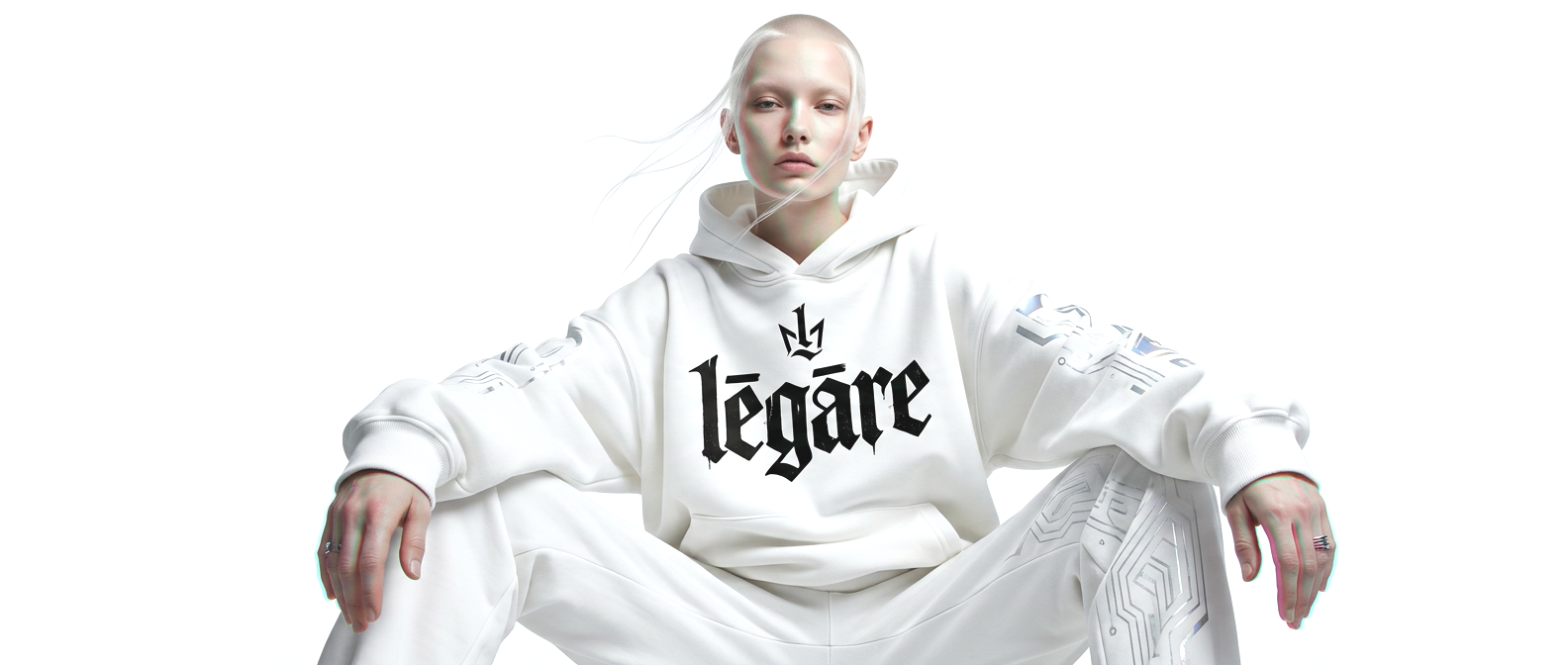
the LEGACY
a manifesto on what remains….
not what survives us, but
what moves through us.
not an object preserved perfectly behind glass.
It is an idea entering matter, being touched, worn, altered, damaged, repaired, interpreted, misunderstood, loved, and passed forward.
The moment someone inhabits a thing, it begins accumulating meaning.
That is where legacy begins.
Not in preservation.
In participation.
Someone designs the machine.
Someone builds it.
Someone buys it.
Someone modifies it.
Someone names it Demon Cat.
Someone drives it down Woodward.
Someone standing on the sidewalk remembers the sound twenty years later.
The original creator could never have designed all of that.
And yet all of it belongs to the creation.
LEGACY IS A LIVING SYSTEM.
It travels through bodies.
Through clothes.
Through machines.
Through neighborhoods.
Through photographs.
Through typography.
Through music vibrating through an open window.
Through stickers layered onto glass.
Through scratches nobody intended to make.
Culture does not remain pristine.
Culture acquires fingerprints.
Perhaps this is why
imperfection matters.
The pristine object tells us what something was supposed to be.
The worn object tells us what happened to it.
The faded shirt.
The scratched record.
The altered automobile.
The building with five generations of paint beneath its newest wall.
The photograph whose colors no longer resemble the afternoon it captured.
These are not failures of preservation.
They are evidence of encounter.
⚡️
And perhaps this is where artificial intelligence enters the story too.
We are living through another moment when the tools of creation are changing faster than our definitions of creativity.
So we argue - What counts? Who made it? Is it authentic? Is it art? Is it too easy? Is it contaminated? Should the imperfection be corrected?
But legacy has never been created by protecting culture from new tools.
Legacy happens when people touch the tools available to them and leave evidence of themselves behind.
The printing press changed the word.
Photography changed the image.
Recording changed music.
Sampling changed recording.
Digital tools changed design.
And now generative systems disturb the surface again.
Perhaps the interesting question isn't: Is this legitimate?
Perhaps it is:
What will humans do with it?
That answer cannot be generated in advance.
It has to be lived.
Which is why the SLOP may matter.
The strange hands.
The impossible letters.
The almost-logos.
The beautiful accidents.
The hundred images generated before something suddenly vibrates differently.
Don't correct all the evidence away.
Some artifacts should remain exactly as they arrived because they belong to this particular moment in technological history.
Someday the imperfections themselves may date them perfectly.
the LEGACY is not THE LOGO.
The logo is only a doorway.
The legacy is what happens after somebody walks through it.
A brand becomes culture when people begin carrying it into places its creator cannot control.
They wear it differently.
Photograph it differently.
Combine it with something unexpected.
Attach memories to it.
Give it slang.
Damage it.
Keep it.
Lose it.
Find it twenty years later in a drawer and suddenly remember who they were.
That is when design stops being communication and becomes
world-building.
The creator establishes conditions.
The inhabitants create the world.
And maybe that is why fashion is such a perfect carrier of legacy.
You don't merely look at clothing.
You put your body inside the idea.
For a day, the object and the person become one temporary composition -
You choose what to wear. You walk outside. The world responds. Meaning accumulates.
Tomorrow you choose again.
Identity becomes something less like a monument and more like an ongoing edit.
NOTHING STAYS STILL LONG ENOUGH TO BECOME PERMANENT.
That may be the paradox of legacy.
We imagine legacy as permanence.
But everything that actually survives does so by changing.
Stories change mouths.
Music changes speakers.
Cities change inhabitants.
Brands change bodies.
Machines change owners.
Ideas change minds.
Even memory changes every time it is remembered.
Legacy therefore isn't the preservation of form.
It is the preservation of movement.
Something continues.
⚡️
And sometimes the continuation is completely absurd.
You spend a night thinking about legacy.
Woodward is roaring.
Old machines and new machines Cruise the same historic road… like a Dream…
I generate images of imagined street culture while actual street culture passes outside.
You wonder what happens when people inhabit objects.
And somewhere in the night,
Demon Cat enters the frame.
Metal meets metal.
The pristine surface changes.
An unwanted mark enters the archive.
There is sadness in that too.
Because participation means vulnerability.
To inhabit the world is to allow the world to touch you.
Nothing loved remains untouched forever.
Maybe that is not the opposite of legacy.
Maybe that is precisely how legacy is made.
Not through immunity from change, through
continuity despite change.
Repair it.
Reimagine it.
Tell the story.
Keep moving.
the LEGACY is not what we leave behind.
It is what we set in motion.
An image becomes an outfit.
An outfit becomes a memory.
A memory becomes a story.
A story becomes an idea in someone else's mind.
That idea becomes something we could never have predicted.
Creation continues beyond the creator.
That is the beautiful loss of control.
That is the inheritance.
That is the transmission.
THE LEGACY.
Not a monument.
A current.
Not perfection.
Evidence.
Not ownership.
Participation.
Not what remains unchanged.
What refuses to stop becoming.